If you’re not already familiar, composting is a natural process of recycling, rather than throwing away food scraps and leaves, so this organic matter can turn into valuable fertilizer aka “black gold” that will better your soil, plants and trees.
We started composting several years ago, but got derailed at times due to construction and moving. However, I’m proud to say that we are back!
So, if you too want to compost, how do you get started?
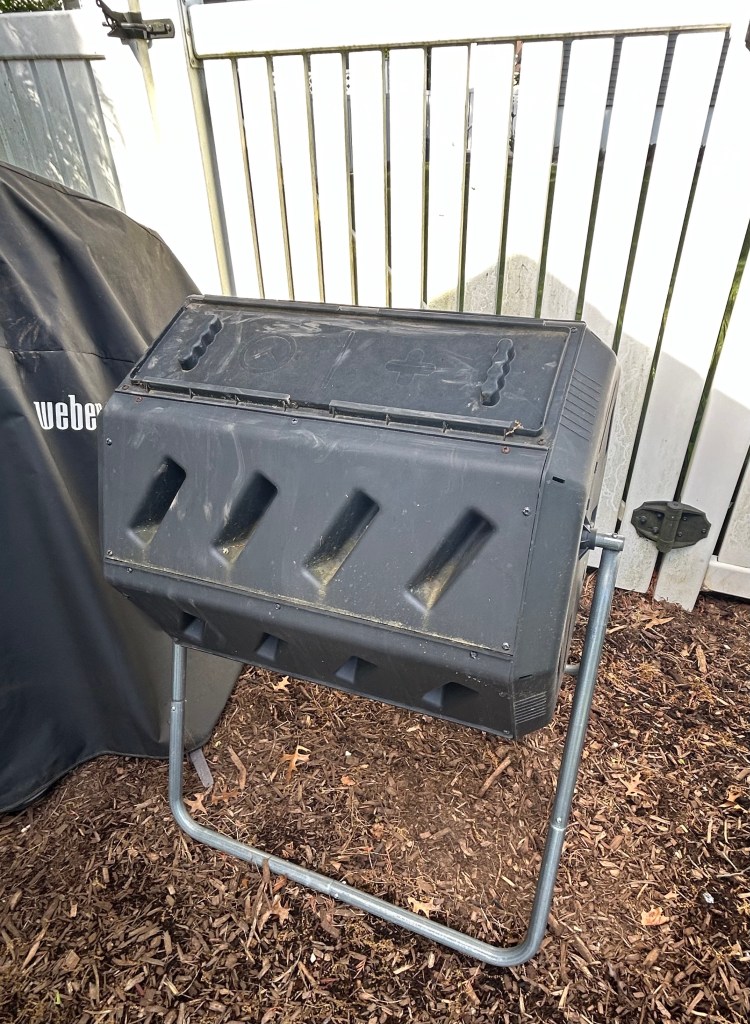
First, you’ll need to decide how you’ll compost – whether it’s investing in a composting tumbler or creating your own (this Spruce overview has a lot of great DIY plans to consider), choose one that works best for you and keep it a dry and shady home.
Next, you’ll want to designate a large bowl that you can use throughout the day for your food waste and then add to the composter at the end of each day. I chose a stainless steel bowl (it’s about the size of the biggest one from this set) and be sure to ventilate the lid, so air can escape and your scraps don’t start to stink!
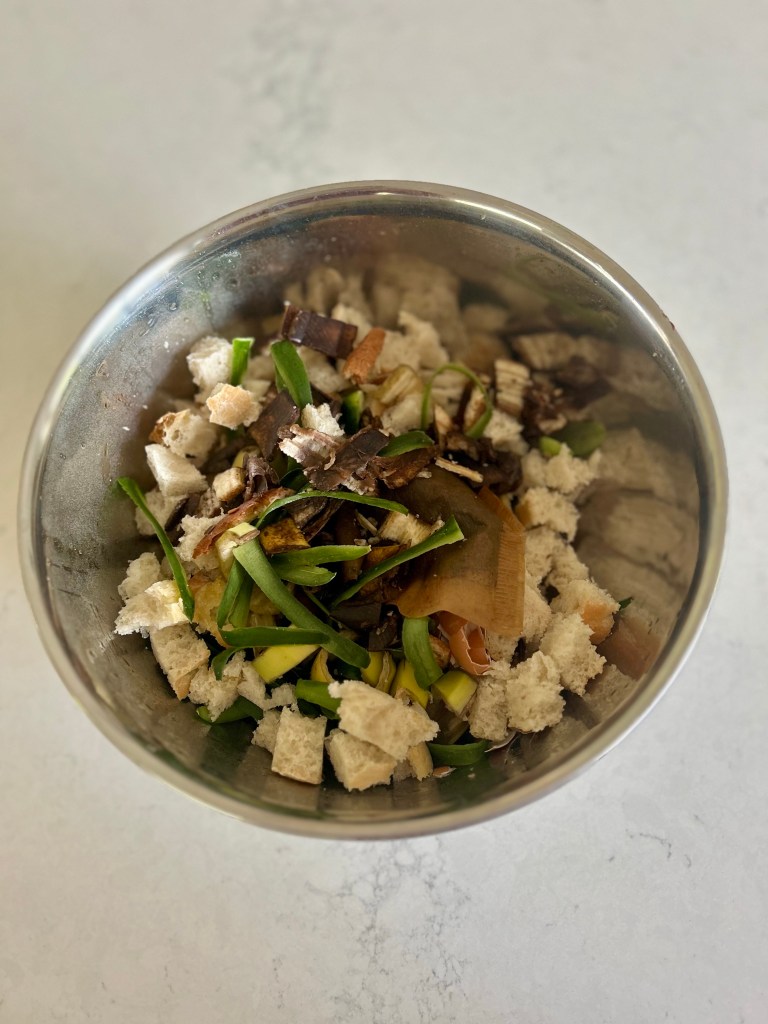
Now, you’re ready to compost – be sure to feed your compost equal parts brown plant material for carbon, like dead leaves, twigs/branches or paper, and greens for nitrogen. Greens will most likely be your food scraps, including coffee grinds (including your coffee filter if you use unbleached filters) along with fresh grass clippings.
A great rule of thumb is that you can compost almost anything – think vegetable and fruit and peels, egg shells, nuts, bread and yard scraps – except dairy like cheese/milk, meat, bones and other animal products, used paper towels, bioplastics and lint (you don’t want microplastics there!). Remember to keep the waste to small pieces, ideally no thicker than your finger, so it can break down faster.
Lastly, remember to turn your composter or mix your pile up often and get ready to reap the benefits of your gold, while you sustainably reduce landfill waste and greenhouse gases!
 Living Cleaner, Easier & Safer